

Volume 31 Issue 2, Spring 2026
by Sheila Ferguson and Gerco Hoogeweg
Vernal pools play a critical role in supporting wildlife, making their restoration a high priority at JK Black Oak Wildlife Sanctuary. Two of our vernal pools, the LeSabre and Pin Oak pools, have been degraded over the years by trash and encroaching invasives. Restoration of these two vernal pools is the focus of our most recent grant-funded project at JK Black Oak. The restoration will improve habitat for wildlife, with a focus on amphibians that rely on the pools for breeding. Over time, the improved habitat should result in an increase in the diversity and number of species using the pools.
The vernal pools restoration project is our most ambitious one yet at JK Black Oak, and the one that has been most impacted by weather. We had planned on completing the project in a single year, but nature had other ideas. The trouble started in the fall of 2024, when there were no acorns for collection at JK Black Oak. The few acorns produced were eaten by wildlife before we could get to them. (Although acorn production varies from year to year, having so few is unusual.) The lack of acorns meant we could not propagate native oaks from the property for planting in 2025. Then in the winter and spring of 2024/2025, the vernal pools did not fill with water. Although the lack of water did not affect restoration activities, it did mean that amphibians could not breed.
Restoration work began in November 2024, and thus far 10 volunteer work days — plus many other days for planning, prep, and setup — have been devoted to restoring the two pools.
There are some common elements to both vernal pools. Both were surrounded by invasives that needed to be removed, and both needed to be planted with native trees and shrubs after the invasives were removed. Usually, restoration projects at JK Black Oak involve protecting existing tree seedlings with fencing or tree cages instead of planting seedlings. However, the areas around the LeSabre and Pin Oak pools are so overrun with invasives that there are no seedlings to protect, and the seedbank is full of invasive seeds that will germinate and likely overwhelm any natives that might emerge.
Pin Oak Vernal Pool Restoration
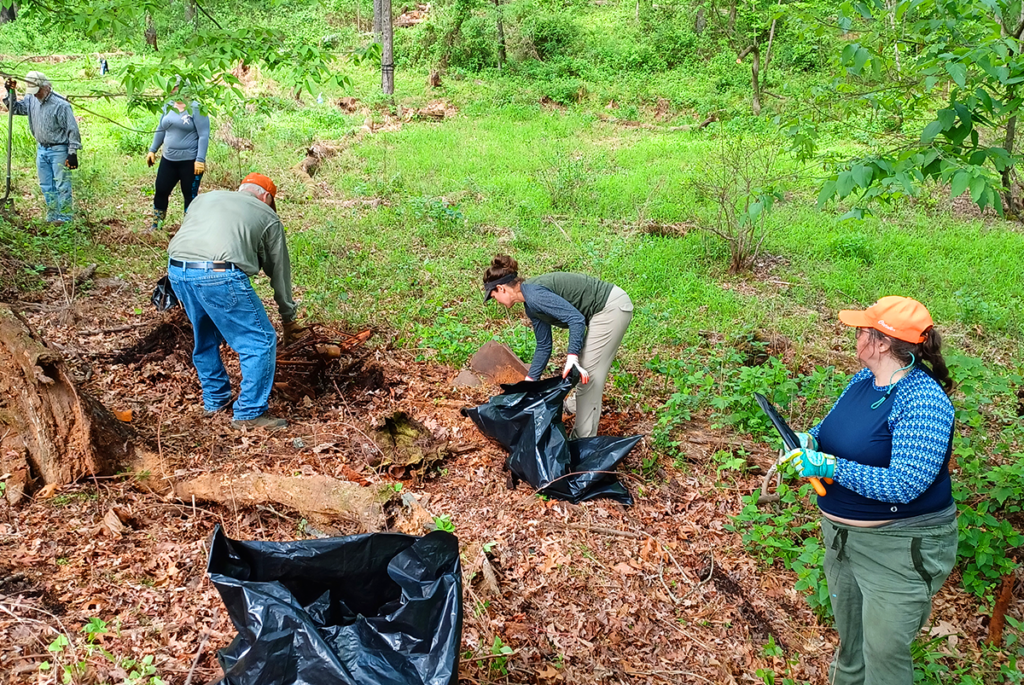
The Pin Oak pool, located at the southern edge of the property in an area that once was pasture, was completely surrounded by a thicket of Autumn Olive (Elaeagnus umbellata). These invasive shrubs grow and spread rapidly, and we’ve had a lot of practice removing them at various places on the property. By the end of April, volunteers had removed over 200 Autumn Olives to create a large, cleared buffer around the pool.
A stand of Tree of Heaven (Ailanthus altissima) on one side of the pool was another story. In the summer of 2024, we experimented with two methods to kill this invasive non-native, both of which proved unsuccessful. So we came back a year later using a higher concentration of herbicide to hack and spray the trunks. If they leaf out this spring, we’ll know they are still not dead.
The next step was to install the deer exclosure fence in the newly cleared area. This was the fourth exclosure fence installed at JK Black Oak. At nearly 600 linear feet, it is the largest one yet. Working with small teams focusing on specific tasks, the fence was installed over the course of a couple of work days. Having learned from previous mistakes, this time we had enough equipment and were spread out to work. The fence will protect the native trees and shrubs planted around the pool from being eaten by White-tailed Deer.
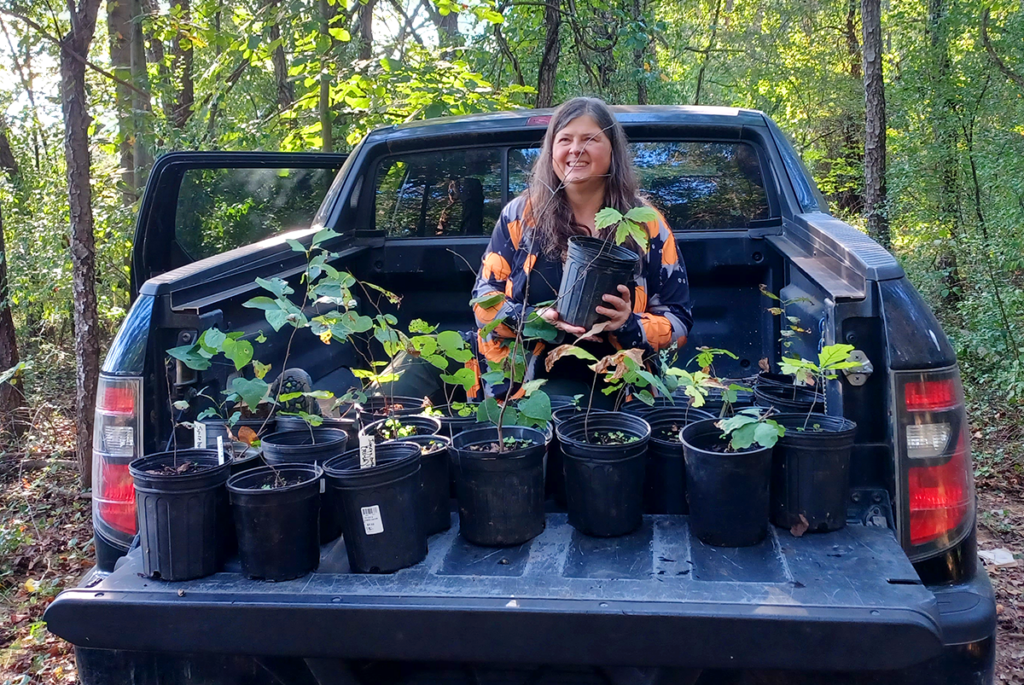
Inside the fence, we planted 75 seedlings in October. Once the Trees of Heaven are dead, they will be taken down to avoid falling on the fence, and replaced with native trees and shrubs.
LeSabre Vernal Pool Restoration
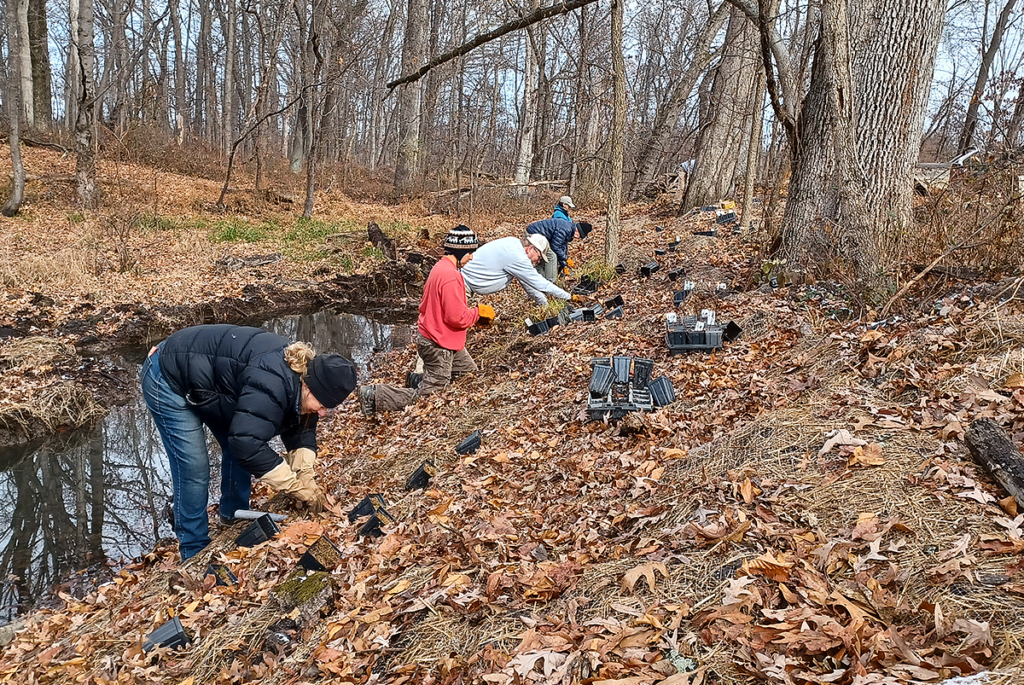
In November 2024, the LeSabre pool restoration began with native tree and shrub planting in an area above the pool where invasives had been cleared. The most useful tool for digging holes in this compacted ground was a pickaxe. By the summer of 2025, all but two of the shrubs and trees were doing surprisingly well in spite of the lack of rain.
After working on the Pin Oak pool in April, we returned to the LeSabre pool in May. Usually the pool would still be full of water this time of year, but the ongoing drought meant that there was nothing but mud. That allowed us to do another round of trash removal. This was our fourth or fifth round of trash removal since 2021, and we have removed over 2,500 pounds of scrap metal. Why is there so much trash at the LeSabre pool? It was used as the local dump, probably during the 1960s and ’70s, based on the trash we’ve found, including an abandoned Buick LeSabre.
Erosion of the steep slope on one side of LeSabre had resulted in sediment buildup in the pool. We had planned to remove it in summer when the pool would be completely dry. However, once again the weather did not cooperate. July brought higher than normal amounts of rain, turning the bottom of the pool to mud. By late September the pool was finally dry, and a layer of sediment could be removed. The removed sediment was used to reduce the steepness of the slope. Erosion control mats were installed, and logs were placed parallel to the slope to stabilize the bank.
Tree and shrub planting took place in November 2025, with volunteers adding 58 more woody natives to those planted the previous year. Silky Dogwood (Cornum amomum) and Eastern Redcedar (Juniperus virginiana) were planted next to the earlier location in the compacted soil. Water-loving Buttonbush (Cephalanthus occidentalis) were planted at the edge of the pool, and south of the pool we planted Common Pawpaw (Asimina triloba). On the last work day of 2025, 287 herbaceous natives were planted into the slope.
Unlike the Pin Oak pool project, no exclosure fence will be installed. The topography of the LeSabre pool area makes the installation all but impossible. Instead, we are using 4-foot fencing that encloses narrow areas (which deer will not jump into) and tree cages to protect seedlings at risk of deer browse.
Looking Ahead
This year, we will continue removing invasives around the LeSabre pool and finish planting trees and shrubs at both vernal pools. All work needs to be completed by October 31, 2026, in accordance with the terms of the grant.
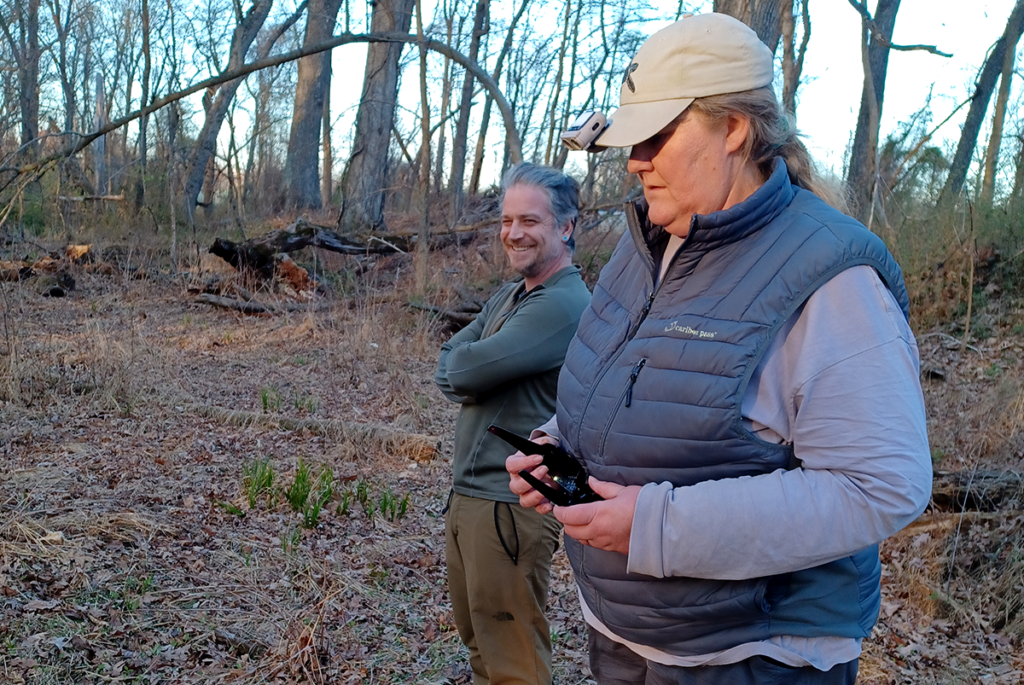
The LeSabre pool finally started to fill in March this year, but the Pin Oak pool has remained dry. The monitoring team will be checking the LeSabre and other vernal pools on the property for amphibian breeding and comparing the data to previous years. The team will also be monitoring reptile and amphibian movement throughout the property to determine if the removal of invasives increases herpetofauna movement resulting in greater wildlife diversity at the pools.
Despite the drought, wildlife activity at the Pin Oak pool has already increased. After the Autumn Olive was cleared last spring, the increased presence of birds in the area was immediately noticeable. The cleared area also made it possible to observe Eastern Spadefoot toads outside the pool and find some of their burrows. This year we are hopeful that we’ll continue to see an increase in wildlife at both vernal pools.
Funding for restoration of the vernal pools is provided by a grant from Microsoft, in collaboration with the Society for Ecological Restoration.
Sheila Ferguson is Loudoun Wildlife’s Plant NOVA Natives representative. Gerco Hoogeweg is the JK Black Oak Wildlife Sanctuary manager.