

Volume 31 Issue 3, Summer 2026
by Barbara De Rosa-Joynt
Underplanting — planting beneath trees or shrubs, often with shade-tolerant plants — has been a tried-and-true gardening technique for a long time. So-called soft landings provide an opportunity to take that technique to the next level by selecting plants that support biodiversity in your landscape to intentionally support pollinators and other wildlife.
Soft landings are diverse native plantings under keystone or other native trees or shrubs that provide shelter and habitat for parts of the life cycles of moths, butterflies, bumblebees, fireflies, lacewings, and beetles, among others. They create a safe space for pollinators and other wildlife to overwinter — burrowed underground or nestled in the plants and leaf litter — and cover to hide from predators during the growing season.
Many larvae of lepidoptera (butterflies, moths, and skippers) drop to the ground beneath their host plants to complete their life cycles in the duff (partly decayed organic matter) under or near the host plant or underground. If a caterpillar drops onto pavement, mulch, or turf, it is more likely to be eaten by a predator or smooshed, or to struggle to burrow into compacted soil. Other wildlife will benefit from soft landings too, including chipmunks, toads, frogs, skinks, salamanders, box turtles, birds, and foxes.
Keystone plants are native plants that support considerably more native insect species: just 14% of native host plants collectively feed the caterpillars of 90% of lepidoptera, and some of those are also a source of pollen for specialist bees whose larvae can only eat pollen from specific plants.
The top three keystone native tree genera in our region support an astonishing number of lepidoptera species: oak (Quercus), 436 species; plum/cherry (Prunus), 340; and birch (Betula), 284. The top two keystone shrub genera, willow (Salix) and blueberry (Vaccinium) support 289 and 217 species respectively; each also supports 14 specialist bee species. Top native perennial keystone genera include goldenrod (Solidago, 104 lepidoptera/42 bees) and aster (Symphyotrichum, 100 lepidoptera/33 bees), both of which include shade-tolerant species.
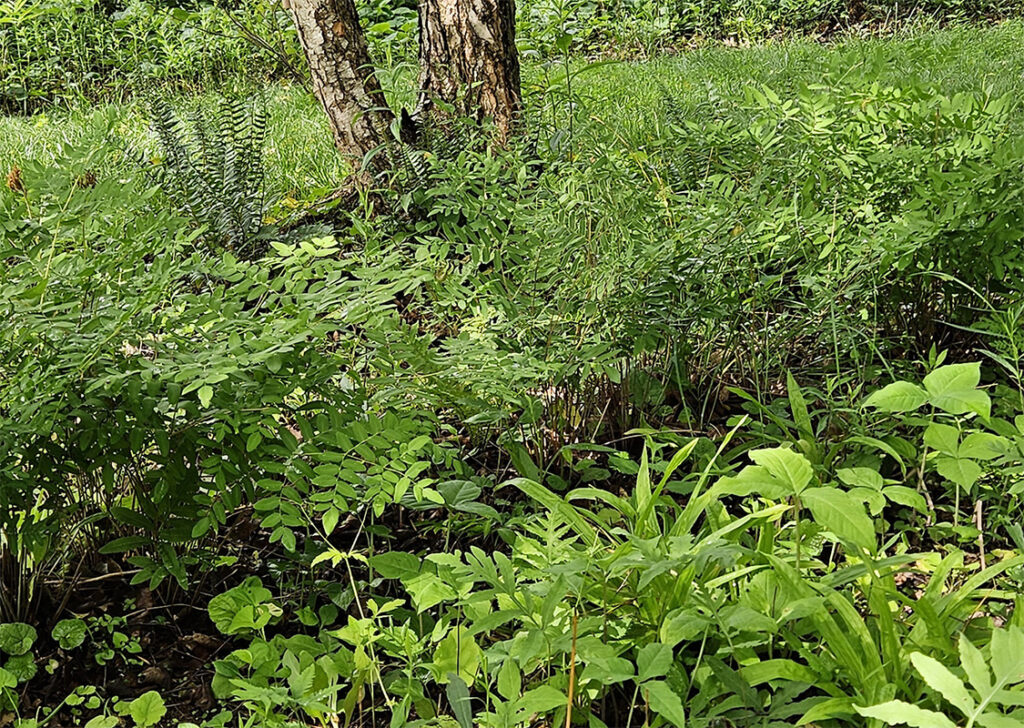
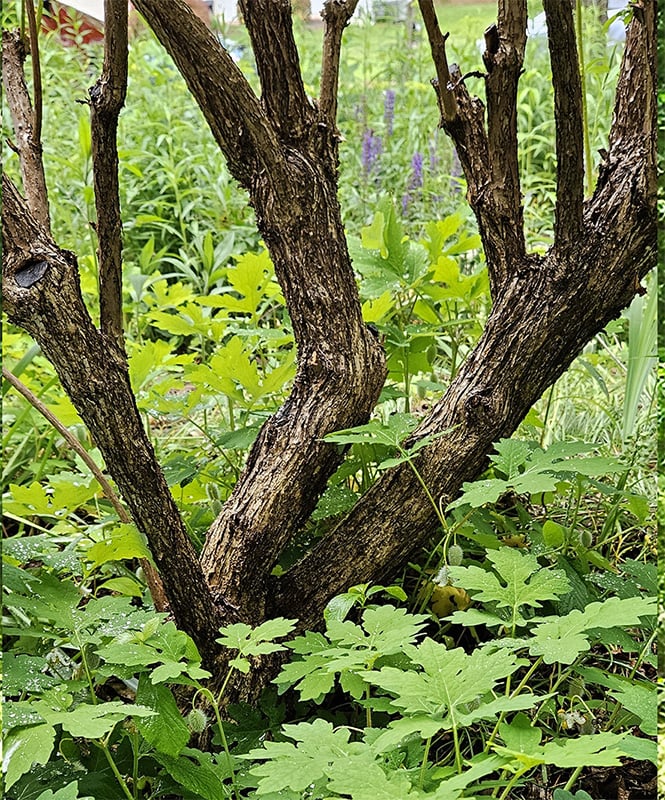
There are some important considerations for anyone who wants to create soft landings for wildlife beneath their own trees.
Do:
- Protect the health of the tree!
- Remove any invasive species.
- Dig with great care to avoid damaging shallow tree roots.
- Use a hand trowel, not a full-size shovel.
- Let the leaves fall naturally and rake other fallen leaves into the area.
- Use plant plugs or other small-size plants; you can even plant seeds. The smaller the root system, the easier it is to tuck it between the tree’s roots without inadvertently causing harm.
Do not:
- Dig large holes for plants or use a full-size shovel.
- Dig out turf or use a sod cutter on grass running right up to the trunk. Instead, smother the grass in the fall.
- Create a raised bed under your tree. Adding soil or compost on top of tree roots can affect tree health.
- Plant up against the tree trunk. Plant up to about 3 feet from the trunk and let plants naturally fill in.
- Use landscape fabric.
Barbara De Rosa-Joynt is a Loudoun Extension Master Gardener and Wildlife Sanctuary Ambassador.
Resources:
National Wildlife Federation: “Keystone Native Plants,”
Heather Holm: “Soft Landings”.
Leave a reply